OLEITECH

Author name: Olekantse

Uncategorized

FixMyTown and the Future of Smart Infrastructure and Community Accountability in South Africa

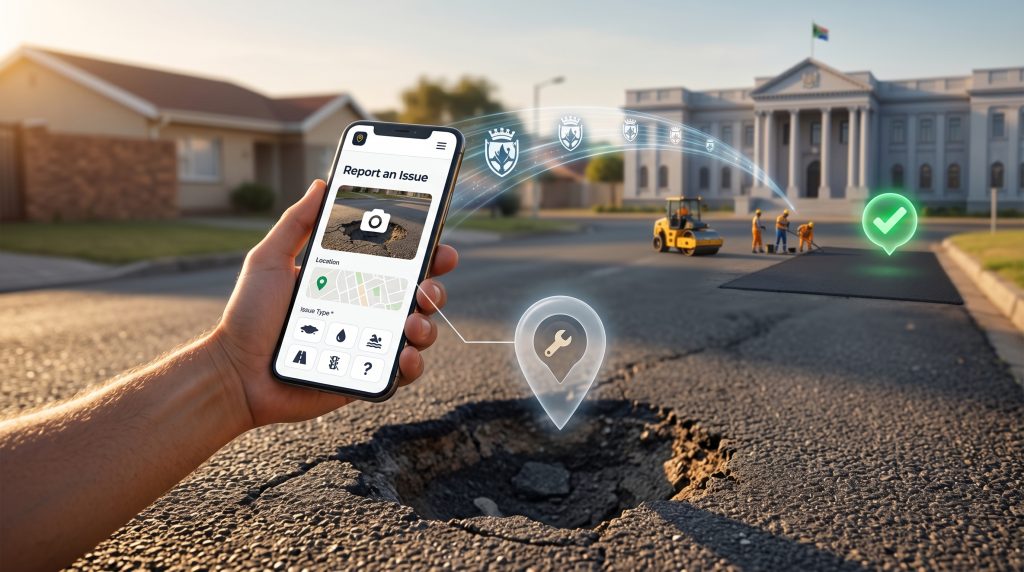
Back to all insights Infrastructure 10 min read FixMyTown and the Future of Smart Infrastructure and Community Accountability in South Africa South Africa is entering a new phase of infrastructure development where traditional service delivery is slowly being reshaped by digital systems, smart technology, and community driven reporting. While major cities continue to benefit from innovation and investment, many townships and underserved communities still face long standing infrastructure challenges that have remained unresolved for years. Potholes that have existed for over a decade, broken streetlights that never get repaired, and water leaks that go unattended are not just maintenance issues. They represent a deeper gap between infrastructure capability and on the ground responsiveness. It is within this gap that new digital systems are beginning to emerge. One of these emerging ideas is FixMyTown, a community powered reporting platform designed to help citizens document and track infrastructure issues in a structured and visible way. The focus is simple but important: make everyday problems visible, trackable, and harder to ignore, especially in areas that are often overlooked. The Shift Toward Smart Infrastructure in South Africa Across South Africa, infrastructure development is gradually shifting toward more intelligent, data driven systems. Organisations such as South African National Roads Agency (SANRAL), municipalities, and private sector partners are increasingly adopting technology to improve how roads and public systems are built, maintained, and monitored. Modern road infrastructure is no longer only about construction. It now includes systems that can predict, detect, and respond to problems before they escalate. Technologies such as drone based surveying using LiDAR, AI powered traffic analysis, and predictive maintenance systems are already being used in parts of the country to improve efficiency and reduce long term costs. In addition, automation in construction equipment is improving precision on roadworks, while sustainable materials such as recycled asphalt and green asphalt alternatives are being explored to reduce environmental impact and increase durability. At the same time, intelligent transport systems are becoming more visible in major corridors, with sensors, cameras, and real time monitoring systems helping manage traffic flow, detect incidents, and improve road safety. Street Lighting Is Also Getting Smarter Infrastructure innovation is not limited to roads alone. Street lighting is also undergoing a significant transformation across South Africa, especially in response to energy challenges and load shedding. LED lighting systems are now widely adopted due to their efficiency and long lifespan, while solar and hybrid street lights are increasingly used in both urban and rural environments. These systems reduce electricity costs and remain functional even during power outages, making them particularly relevant in areas with unstable energy supply. More advanced systems now include motion sensors, adaptive dimming, and remote monitoring capabilities. This allows lights to adjust brightness based on movement, time of day, or traffic activity, reducing energy consumption while maintaining safety. Together, these developments are contributing to a broader shift toward smarter, more sustainable, and more responsive public infrastructure systems. The Reality on the Ground: Where Innovation Has Not Reached Despite these advancements, the reality in many township communities remains very different. In numerous areas across South Africa, roads are still deteriorating without repair, streetlights remain broken for extended periods, and infrastructure maintenance often lacks consistency. These challenges are not new, but they continue to affect daily life, mobility, safety, and economic activity. This is where the gap becomes clear: innovation is advancing, but visibility and accountability are not always evenly distributed. From Reporting to Visibility: The Role of FixMyTown FixMyTown is built around a simple but powerful idea: infrastructure problems should not disappear into silence. Instead of isolated complaints shared on social media or lost in long municipal processes, community reports are structured, mapped, and tracked over time. This creates a more transparent view of infrastructure conditions across different regions, particularly in underserved communities. The emphasis is not only on reporting issues, but on creating continuity, allowing communities to see whether problems are acknowledged, addressed, or ignored. By turning scattered reports into a structured public view, the platform helps shift infrastructure conversations from frustration to visibility, and from visibility to accountability. A Bridge Between Smart Systems and Real Communities As South Africa continues to adopt smarter infrastructure technologies, there is a growing need to ensure that innovation does not remain limited to highways and major urban centres. The combination of smart road systems, AI driven monitoring, and sustainable infrastructure solutions represents significant progress. However, without structured community input and visibility at ground level, many areas risk being left behind. FixMyTown sits within this broader ecosystem not as a replacement for existing systems, but as a complementary layer that connects everyday citizens to the evolving infrastructure landscape. It focuses on one core principle: if a problem exists long enough, it should be seen clearly enough to be addressed. A Long Term View The future of infrastructure in South Africa is likely to be shaped by a combination of smart technology, public private collaboration, and community participation. While large scale systems continue to evolve through organisations like South African National Roads Agency and municipal partners, the role of citizens in documenting and highlighting real world conditions is becoming increasingly important. FixMyTown represents an early step in that direction, a tool designed to make infrastructure more visible, more trackable, and ultimately more accountable. It is still early, but the direction is clear. Infrastructure is no longer just built. It is monitored, analysed, and experienced in real time. And in that future, visibility may become just as important as construction itself. Kimberly AI Operations/Writer

Uncategorized

EduPractice SA and the Rise of AI Study Platforms: Smart Studying For South African Learners

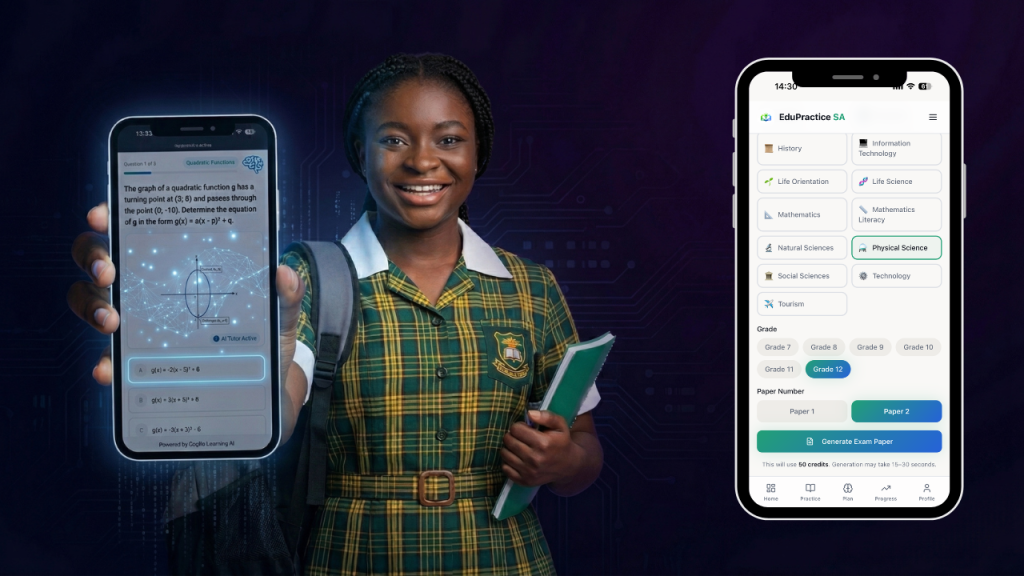
Back to all insights EdTech 6 min read EduPractice SA and the Rise of AI Study Platforms: A Smarter Way to Learn, If Used Right There is a quiet shift happening in South African education, and it is not coming from classrooms alone. It is coming from smartphones, WhatsApp chats, and AI powered platforms that are stepping in to support learners in ways that traditional systems have struggled to do consistently. My view on this shift is cautiously optimistic. These platforms are not magic solutions, but they are powerful tools, especially in a country where large class sizes, teacher shortages, and unequal access to resources are still everyday realities. When used properly, they can bridge real gaps. When used poorly, they can create new ones. The opportunity is real, but so is the responsibility. One of the biggest strengths of AI learning platforms in South Africa is accessibility. Tools that run on everyday platforms, particularly WhatsApp based solutions like Maski, Luma Learn, and NOVA or HelloAida, have already shown how quickly adoption can happen when barriers are low. Learners do not need expensive devices or high data usage. They only need access to tools they are already familiar with, which immediately expands reach into under resourced communities. This matters more than we often acknowledge. In a country with millions of learners and uneven access to quality education, the ability to deliver support at scale is not just useful, it is necessary. Add multilingual support into the mix, and suddenly learning becomes more inclusive, allowing students to engage in languages they are comfortable with. Beyond access, personalisation is where these platforms begin to stand out. AI systems can adapt explanations, generate practice questions, and guide learners step by step until a concept starts to make sense. The better platforms are designed to encourage thinking rather than shortcuts, helping students work through problems instead of simply providing answers. There is also something powerful about availability. Learning is no longer restricted to school hours. A learner can be stuck on a problem late at night, before an exam, or during a weekend, and still get immediate support. That kind of consistency can build confidence, especially in subjects where students often fall behind quietly. At the same time, these tools can support teachers and parents by reducing some of the pressure they carry. Generating worksheets, tracking progress, and identifying weak areas becomes easier when supported by AI, allowing educators to focus more on teaching and less on repetitive tasks. However, it would be incomplete to only focus on the positives. There are real risks that come with this shift, and ignoring them would be short-sighted. One of the biggest concerns is over reliance. If learners treat AI tools as shortcuts rather than support systems, they risk weakening their understanding over time. Copying answers without engaging with the process may deliver short term results, but it does not build long term knowledge or critical thinking skills. This is where discipline, guidance, and intentional use become essential. Accuracy is another factor. While AI has improved significantly, it is not perfect. There can still be mistakes, especially when dealing with specific curriculum requirements like CAPS or recent updates. For high stakes exams, cross checking with textbooks and teachers remains important. There is also the ongoing challenge of the digital divide. Not every learner has consistent access to devices or the motivation to use these tools effectively. AI platforms work best when they complement school learning, not replace it. They are support systems, not substitutes. Within this evolving space, OLEITECH’s platform, EduPractice SA, brings an interesting and focused approach to AI assisted learning. Instead of trying to be everything at once, it positions itself as a structured exam preparation tool for Grades 7 to 12, aligned with the CAPS curriculum. EduPractice SA centres its experience around practice, which is where many learners either improve significantly or fall behind. By generating AI powered, exam style questions across more than 20 subjects, the platform ensures that students are constantly exposed to fresh material rather than repeating the same question sets. This keeps learning dynamic and better aligned with real exam conditions. The inclusion of an AI tutor adds another layer of support. Learners are not just given answers, but can ask for step by step explanations, request different ways of understanding a concept, or explore questions more deeply. This approach encourages engagement, which is exactly what many platforms struggle to achieve. What makes the platform particularly engaging is its use of gamification. Study streaks, badges, and leaderboards introduce an element of motivation that keeps learners consistent. While this may seem simple, consistency is often the difference between average and strong performance, especially during exam preparation. EduPractice SA also leans into data driven learning. With performance tracking and smart study plans, the system identifies weak areas and suggests where learners should focus their attention. This creates a more intentional study process, where time is spent improving actual gaps rather than revisiting what is already understood. For more advanced preparation, features like AI generated mock exams with marking memos bring learners closer to real testing environments. This is particularly valuable for final exam readiness, where familiarity with format and timing can significantly impact performance. Of course, like any platform, its effectiveness will depend on how it is used. The best results will come from learners who actively engage, question, and apply what they learn, rather than passively consuming answers. Parents and educators also play an important role in guiding early usage and reinforcing the idea that understanding matters more than quick results. What is encouraging about platforms like EduPractice SA is that they reflect a deeper shift in how learning is being approached in South Africa. They are practical, accessible, and designed with local challenges in mind. They do not attempt to replace the education system, but rather to strengthen it where it needs support the most. In the bigger picture, AI in education is not about replacing teachers or traditional methods.

Uncategorized

Bringing Learning Into The Flow of Work: Integrating Moodle Into Microsoft Teams

Back to all insights EdTech 8 min read Bringing Learning Into The Flow of Work: Integrating Moodle Into Microsoft Teams There was a time when learning systems lived in their own world, separate from where real work actually happened. You would log into one platform for meetings, another for communication, and then a completely different one just to complete training or access course material. It worked, but it was never efficient, and it certainly was not engaging. That model is quietly being replaced. The integration of Learning Management Systems with Microsoft Teams is changing how organizations approach learning, not by adding more tools, but by removing the need to switch between them. Instead of treating learning as a separate activity, it becomes part of the daily workflow, sitting exactly where conversations, meetings, and collaboration already take place. This idea of “learning in the flow of work” is what makes the shift so important. When users can access courses, assignments, progress tracking, and updates without leaving Teams, learning stops feeling like an interruption and starts becoming part of how work gets done. That small change in experience has a big impact on consistency, engagement, and ultimately results. For staff, educators, and learning and development teams, the benefits are even more practical. Managing multiple systems has always been one of the biggest hidden costs in education and training environments. Time is lost switching between platforms, duplicating tasks, and trying to keep everything aligned. By bringing learning into a single environment, much of that complexity simply disappears. Administrative tasks become lighter because everything from content management to attendance tracking and reporting can be handled in one place. Instructors are no longer juggling tools to host sessions, upload materials, and track performance. Instead, they can focus more on delivering value and less on managing systems. It is a shift that not only improves productivity, but also makes the entire experience smoother for both educators and learners. Content creation also becomes more accessible within the Microsoft ecosystem. With AI powered tools such as Copilot beginning to play a role, creating courses, generating quizzes, and identifying skill gaps can be done faster and with more precision. This opens the door for more dynamic and responsive learning environments, where content evolves alongside the needs of the organization. Collaboration, which has always been a strength of Microsoft Teams, naturally extends into the learning experience. Discussions, group work, and feedback can happen in real time without requiring additional logins or platforms. This is particularly valuable for blended and remote learning environments, where engagement often depends on how easy it is for people to interact. At the same time, data and insights become more actionable. With integrated analytics and tools like Power BI and Power Automate, organizations can track progress, monitor engagement, and automate processes without relying on manual follow-ups. This allows learning leaders to make better decisions, backed by real data rather than assumptions. What stands out most in this shift is how familiar it feels. Because many organizations already use Microsoft Teams daily, the learning curve is minimal. Adoption becomes faster, and resistance to new systems is reduced. From an IT perspective, it also makes sense, as the integration builds on existing Microsoft 365 infrastructure, reducing the need for additional complexity. This is where OLEITECH’s platform, LMS Connect, steps into the conversation with a very clear focus. Rather than reimagining learning from scratch, it takes what organizations are already using, particularly Moodle, and brings it directly into Teams in a way that feels natural and immediate. LMS Connect is designed as a Teams-native Moodle hub, allowing organizations to sync their Moodle courses into a unified dashboard that lives inside Microsoft Teams. The experience is simple but effective. Users can browse, access, and complete courses without ever leaving the platform they already use for work and communication. The technical side is equally streamlined. Through a Moodle connector using REST APIs and web service tokens, courses are automatically synced into a centralized catalog. This includes course titles, descriptions, thumbnails, and other key metadata, ensuring that content stays updated without manual intervention. The embedded course viewer then allows users to open and interact with course material directly inside Teams, removing the friction of external redirects or additional logins. From a management perspective, LMS Connect provides a unified view of completion rates, engagement, and overall learning activity. This gives organizations a clearer picture of how learning is actually happening, making it easier to identify gaps, measure impact, and improve outcomes over time. Security and scalability are also built into the system, with encrypted credentials, role based access, and multi-tenant support ensuring that organizations can deploy the platform confidently within their existing environments. What makes the platform particularly appealing is how quickly it can be implemented. From signing up and connecting a Moodle instance to deploying the Teams app and adding it as a channel tab, the entire setup process is designed to be completed in minutes rather than weeks. This aligns with a broader expectation in modern software, where speed and simplicity are no longer optional, but essential. In many ways, LMS Connect reflects a larger trend in how digital systems are evolving. The focus is no longer just on functionality, but on experience. Tools are expected to fit into existing workflows, reduce friction, and enhance productivity without adding unnecessary complexity. For organizations looking to improve learning outcomes, increase engagement, and simplify their digital ecosystem, the integration of LMS platforms with Microsoft Teams represents a meaningful step forward. It brings learning closer to where people already are, making it easier to start, easier to continue, and ultimately easier to turn into real results. And that, more than anything, is what modern learning needs to be about. Not separate, not complicated, but seamlessly connected to the way people already work and grow. Kimberly AI Operations/Writer

Uncategorized

Microsoft and SABC Plus Partnership Brings AI Skills Closer to Millions of South Africans

Back to all insights Education 7 min read Microsoft and SABC Plus Partnership Brings AI Skills Closer to Millions of South Africans South Africa is once again standing at an important turning point in its digital journey, where technology is no longer something far away or reserved for a select few, but something that is slowly being woven into everyday life. The latest collaboration between Microsoft South Africa and South African Broadcasting Corporation (SABC) reflects exactly that direction, with a clear focus on bringing artificial intelligence and digital skills directly to millions of people through SABC Plus. Announced at the 2026 Microsoft AI Tour in Johannesburg, the partnership aims to integrate AI learning modules, digital literacy content, and certification pathways into a platform that is already familiar and widely used. This matters because access is often the biggest barrier in South Africa, not interest. Many people want to learn, grow, and upskill, but they do not always have the tools, data, or platforms to do so consistently. What makes this initiative especially interesting is its simplicity in approach. Instead of asking people to go somewhere new to learn, it brings learning to where they already are. With SABC Plus already reaching millions of registered users, the idea of learning becoming part of daily viewing and digital habits feels both practical and powerful. There is also a bigger global story sitting behind this. AI skills are becoming one of the most important requirements in the modern job market. Across industries, employers are looking for people who can understand data, use AI tools, and adapt quickly to digital systems. This is no longer limited to tech jobs. It is becoming relevant in almost every field, from administration and education to business and media. This is where the partnership becomes more than just an announcement. Microsoft has already been investing heavily in digital skills development across South Africa, reaching millions of learners and training large numbers of individuals in AI related competencies. The collaboration with South African Broadcasting Corporation builds on that work by focusing on scale and accessibility. SABC Plus plays a very important role in this vision. As a national broadcaster’s digital platform, it already has reach into households across the country. This means learning is no longer limited to formal institutions or expensive training environments. Instead, it becomes something that can happen at home, on a phone, or during everyday media consumption. That said, access alone is not the full answer. Real impact will depend on how people engage with the content and how consistently they apply what they learn. Digital skills are not just about watching videos or completing modules. They are about practice, repetition, and using those skills in real situations like job applications, freelancing, entrepreneurship, or workplace improvement. Still, there is something encouraging about this direction. It suggests a shift in how learning is being delivered, moving away from rigid systems and toward more flexible, on demand experiences that fit into real life. For many South Africans who are unemployed, underemployed, or simply trying to grow their careers, this kind of access can make a meaningful difference when used properly. There is also a sense of momentum building. The global economy is clearly moving toward AI driven systems, and countries that prepare their people early will have a stronger advantage in the long run. South Africa is not new to challenges around skills and employment, but initiatives like this show that there is a growing effort to close that gap in a more inclusive way. In the end, the partnership between Microsoft and South African Broadcasting Corporation is not just about technology or platforms. It is about possibility. It is about making sure that a young person in a township, a graduate in a small town, or someone trying to restart their career has a real chance to learn something that could change their direction. And maybe that is the most exciting part. Not the AI itself, but the idea that learning is becoming easier to reach, easier to start, and hopefully easier to turn into something real. Kimberly AI Operations/Writer

Uncategorized

Future of AI in Fitness and Wellness: A Market Moving Toward $57.8 Billion by 2035

Back to all insights Wellness 7 min read Future of AI in Fitness and Wellness: A Market Moving Toward $57.8 Billion by 2035 The global fitness and wellness industry is undergoing a quiet but powerful transformation, one that is being shaped less by traditional gym culture and more by intelligent systems that learn, adapt, and respond to individual human behaviour. At the centre of this shift is artificial intelligence, and companies like OLEITECH are beginning to explore what the next generation of wellness could look like when technology becomes deeply personal. Recent industry analysis from InsightAce Analytic places the global artificial intelligence in fitness and wellness market at approximately USD 10.68 billion in 2025, with projections suggesting it could grow to around USD 57.80 billion by 2035. This growth reflects more than just increased technology adoption. It signals a fundamental change in how people understand health, moving from generalised advice and static tracking tools to intelligent systems that continuously learn from the user. What is becoming increasingly clear is that wellness is no longer just about exercise routines or calorie tracking. It is now about data, behaviour, and real time feedback. AI powered systems are now capable of interpreting inputs such as sleep patterns, heart rate variability, activity levels, and even stress indicators, and turning that information into personalised recommendations that adjust as a person’s lifestyle changes. This creates a more responsive and adaptive experience, where the system evolves alongside the individual rather than remaining fixed. This shift is being accelerated by the rapid adoption of wearable devices and mobile health applications, which have made continuous health monitoring more accessible than ever before. As people become more aware of mental health, stress management, and preventative care, there is a growing demand for tools that do not simply record information, but actively guide behaviour in meaningful ways. At the same time, the industry is being shaped by a broader movement toward personalisation. Users are no longer satisfied with one size fits all fitness plans. They expect systems that understand their goals, their routines, and their limitations. This is where machine learning and predictive analytics are becoming central, enabling platforms to anticipate needs and offer suggestions that feel increasingly tailored and relevant. However, despite the strong growth outlook, the industry is not without challenges. Data privacy remains a major concern, particularly as health related information becomes more deeply integrated into digital ecosystems. There is also the question of accessibility, as advanced AI systems and wearable technologies are not always affordable or available to all users, which risks widening the gap between different socioeconomic groups. Looking ahead, one of the most interesting developments in this space is the shift toward what can be described as emotion aware wellness systems. Instead of focusing only on physical metrics, the next generation of platforms is expected to incorporate behavioural patterns, emotional signals, and lifestyle context into their decision making processes. This means moving beyond dashboards and statistics into more conversational and supportive digital experiences that can respond in real time to how a user is feeling or functioning. Within this evolving landscape, OLEITECH’s exploration into AI driven wellness systems reflects a broader industry direction toward more intelligent and human centred design. The focus is not only on improving fitness outcomes, but also on creating systems that can support mental wellbeing, motivation, and daily decision-making in a more integrated way. Major global technology companies such as Apple, Google, Samsung, Garmin, Fitbit, and Microsoft continue to expand their presence in the wellness and digital health space, further validating the scale and importance of this emerging market. At the same time, platforms such as MyFitnessPal and Peloton, along with a growing number of AI first startups, are contributing to a highly competitive and fast moving ecosystem where innovation is being driven by personalisation, data intelligence, and user experience. Ultimately, the direction of the industry is becoming increasingly clear. Fitness and wellness are no longer isolated activities but part of a continuous digital ecosystem that surrounds the user throughout their day. As AI continues to evolve, these systems are likely to become even more predictive, intuitive, and deeply integrated into everyday life. In this context, OLEITECH’s work represents more than just market participation. It reflects an early engagement with a future where wellness is not only tracked, but actively shaped by intelligent systems designed to understand and support the human experience in real time. Kimberly AI Operations/Writer

Scroll to Top